Before You Click Join: A Prep Sheet for Your Tadalafil Video Visit

You booked it on your phone in about ninety seconds. Now you're staring at a video preview of your own face, waiting for a clinician to join, wondering whether you were supposed to prepare something.
You were — just not the way you'd prep for a job interview. A tadalafil telehealth visit is a short, practical conversation, usually ten to fifteen minutes, and nearly all of its usefulness comes from how well you set it up beforehand. Do that part right and you walk away with a dose, a schedule, and a way to reach someone if things go sideways. Skip it and you get a quick shrug and a prescription that may or may not fit your actual life.
The visit is shorter than the buildup
Honest math: a chunk of the appointment window gets eaten by identity verification, a pass through your intake form, and the clinician explaining what they can and can't do over video. The real back-and-forth is closer to six or seven minutes.
That's not a red flag. It's just how these appointments are built. But it means fuzzy answers are expensive. When the clinician asks "any other medications?" and you say "just the usual stuff," you've burned two of the minutes you needed.
What the clinician is actually screening for
They aren't mainly deciding whether you want tadalafil. They're deciding whether it's safe for you. Three things dominate the conversation.
Drug interactions. Specifically nitrates for chest pain — nitroglycerin, isosorbide — which are a hard no alongside any PDE5 inhibitor. Alpha-blockers for an enlarged prostate get flagged too, along with certain antifungals, some antibiotics, and a handful of HIV medications that change how the body clears tadalafil.
Heart and blood pressure history. A recent heart attack or stroke, uncontrolled hypertension, or chest pain on exertion all push the conversation in a different direction.
Anything pointing toward higher risk. Sickle cell disease, a prior priapism episode, or a condition like retinitis pigmentosa will get a follow-up question or three.
The clinician isn't being nosy. They're doing the part of the visit that a checkout page can't do for you.
The one detail that matters more than any other
Your medication list. Not a rough memory of it — the actual list.
That includes things you don't think of as real medications. The tamsulosin your urologist started in April. The nitroglycerin tablet in the glove box that you've never actually used. The antifungal you finished three weeks ago. The daily supplement from Costco with the ingredient panel you've never read. Even the grapefruit juice you have with breakfast, since it changes how tadalafil is absorbed.
The easiest way to handle this: open the pharmacy app on your phone and screenshot the full list, then read from it. Nobody has ever been judged for that.
Bring numbers, not adjectives
"My blood pressure is fine, I think" is not a number. If you have a cuff at home, take two readings in the week before your appointment — sitting still for five minutes first — and jot them down. If you don't have a cuff, the reading from your last physical works, as long as you know roughly when it was.
Same with dates. "A few years ago I had a stent" is a different clinical picture than "a stent in March." Dig through your patient portal before the call, not during it.
Five things within arm's reach
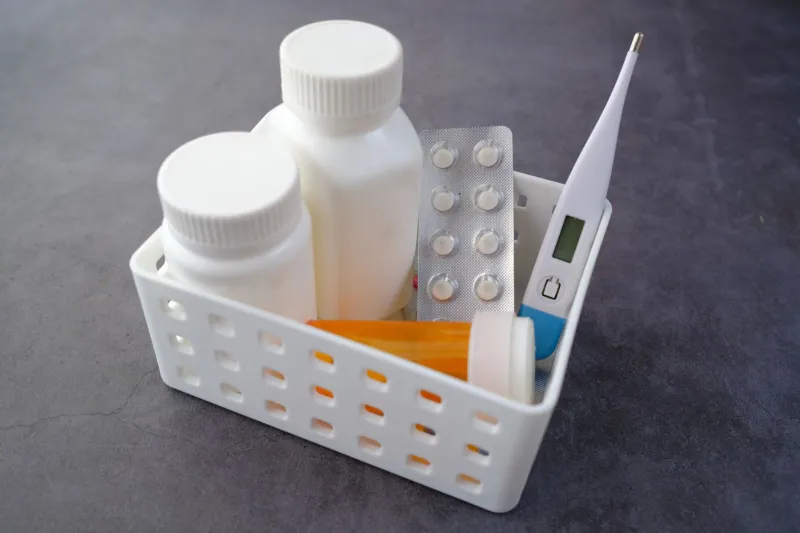
- Pharmacy app or the actual pill bottles
- Recent blood pressure readings with dates
- Insurance card or a photo of it
- A short note with your questions, so you don't go blank
- A glass of water and a closed door
That last one sounds trivial. It isn't. Half the awkwardness of a rushed visit is background noise and the sense that someone might walk in.
Questions that earn their keep
You'll get more out of the appointment if you ask about the choice, not just the product.
- Which schedule fits my situation — a low daily dose or an as-needed dose before sex, and why that one?
- What should I realistically expect the first time, and how often does it take a couple of tries to land on the right dose?
- What's the plan if the response is partial rather than all-or-nothing?
- Which side effects should I wait out, and which one means I should call?
- How do refills work, and who do I contact if the pharmacy and the portal seem to disagree?
Five questions is plenty. You're not trying to run the whole visit.
Name the silence
If the clinician asks something you'd rather not spell out, the worst move is going quiet and hoping they move on — because they will, straight to a generic prescription. Instead, try the plain version. "I'd rather not get into the details, but here's the short version." Or: "Can you ask that a different way?" Both work. Clinicians do this all day.
So you leave with a plan
Before the call wraps, ask for a summary in writing — through the portal, a message, or a visit note. You want the dose, the schedule, what to watch for, and how to reach the prescriber. If a service can't tell you who prescribed your medication or where to send a follow-up question, that's not a scheduling quirk. That's the whole point of a protected telehealth relationship, and it's worth paying attention to.
Ten minutes is enough time. It's just not enough time for two of them — one for small talk, one for the actual reason you logged on.